In a recent post on our website, Dr Emma Clarke from DCU introduced Artificial Intelligence (AI) in everyday life, and explored some examples of AI that work away in the background like the AI that predicts the weather forecast or the AI that recommends what you should watch next on Netflix or YouTube. In this post, Emma takes a look at Generative AI, a different kind of AI that you interact with directly rather than one that works in the background.
The New Kid on the Block: Generative AI
Generative AI (sometimes shortened to ‘GenAI’) gets this name because it can generate new content, such as text, realistic images, or music, based on what you ask it to do. You may have already tried Generative AI tools like ChatGPT, Gemini or Claude.
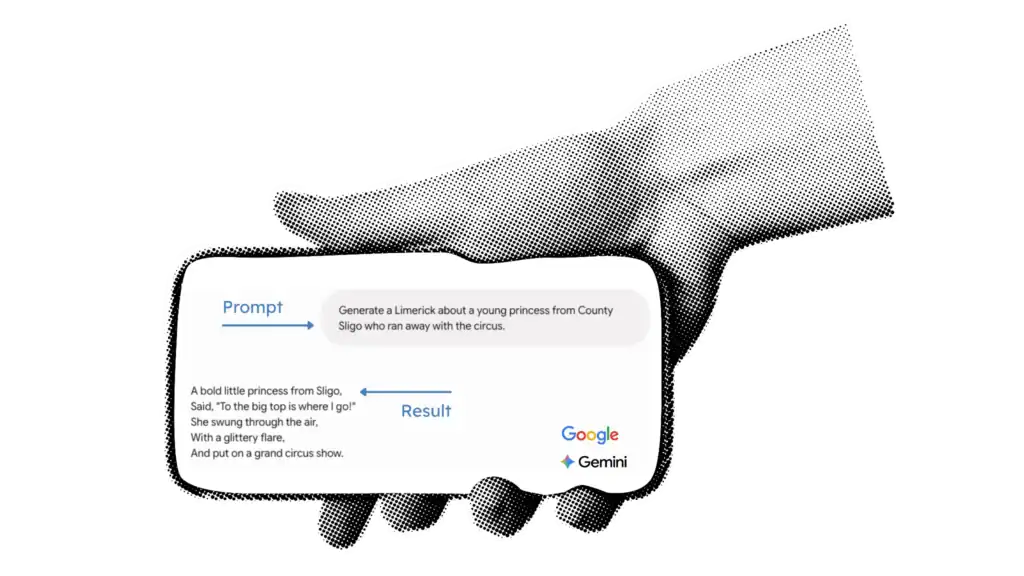
You interact with Generative AI by giving it a request, which is called a “prompt”. Whether you type or speak the prompt into your device, the AI responds by analysing patterns from vast amounts of information to generate a brand-new response word by word. It can draft a letter, suggest a recipe or explain something in plain English.
For example, here’s a poem we generated by giving Google Gemini this prompt: “Write a limerick about a young princess from County Sligo who ran away with the circus.”
How it Works
Generative AI tools are trained on enormous amounts of text, images and other information gathered from books, websites and other often publicly available sources. From all of this, the tool learns patterns, like which words tend to follow others, or what a typical answer to a question looks like. When you ask it something, it isn’t searching for the “correct” answer; it’s predicting, word by word, the most likely-sounding response based on those patterns. That means it can sound, or look, completely confident while being completely incorrect.
That same ability to generate convincing text, images, audio and video is what makes something called a “deepfake” possible. A deepfake is a realistic-looking or -sounding fake image, video or audio clip, made to look or sound like someone said or did something they never did. They can be used to fake celebrity endorsements of scams, produce convincing fake audio or video of election candidates making damaging statements, or to create fraudulent phone calls that trick people into sending money.
Generative AI for Good
Pioneering “deepfake” technology means people who lose the ability to speak due to illness can use AI voice clones of their own past recordings to keep communicating in their own real voice. An example you might be familiar with is former RTÉ presenter, Charlie Bird, who had Motor Neurone Disease. As the disease progressed and affected his speech, he famously used AI technology – trained on decades of his RTÉ broadcast recordings – to clone his voice so he could continue speaking in his own recognisable voice.
What to Watch out for
Through the Age-Friendly AI Opinions campaign, we’ve heard that people have concerns about deepfakes and false information online.
Sharing false information: ‘Be Media Smart’, which was developed by Media Literacy Ireland, advises us to STOP, THINK and CHECK that the information we’re seeing online is accurate and reliable. It’s worth making this a habit before you share information online.
Look out for potential scams: If a “family member” calls asking for money urgently, hang up and ring them back on a number you already have to verify the situation.
The more you understand about how Generative AI works, the better placed you are to protect yourself against scams and deepfakes designed to catch people off guard. Building this awareness is what the Age-Friendly AI Initiative has been working towards since launching in 2025.
Share Your Opinions
We want to hear from you about Artificial Intelligence. Whether you are excited about what AI can do, worried about where it’s headed, or simply curious, we’d love for you to get involved. Share your thoughts here.
Did You Know?
- Generative AI can turn spoken words into text and text into speech in real time, which can be useful for people with hearing loss, low vision or conditions that make reading or writing difficult.
- Running Generative AI tools uses electricity and water to power and cool the data centres behind them, and demand is growing as more people use AI every day.
- Artists and writers have raised concerns that their work has been used to create Generative AI tools without their knowledge. Some worry it’s also affecting their livelihoods, as AI-generated content becomes a cheap, fast substitute for hiring a human illustrator, writer or photographer.
“AI slop” is the name for the flood of low-quality, mass-produced AI content now appearing online.
Check out upcoming Age-Friendly AI workshops here.